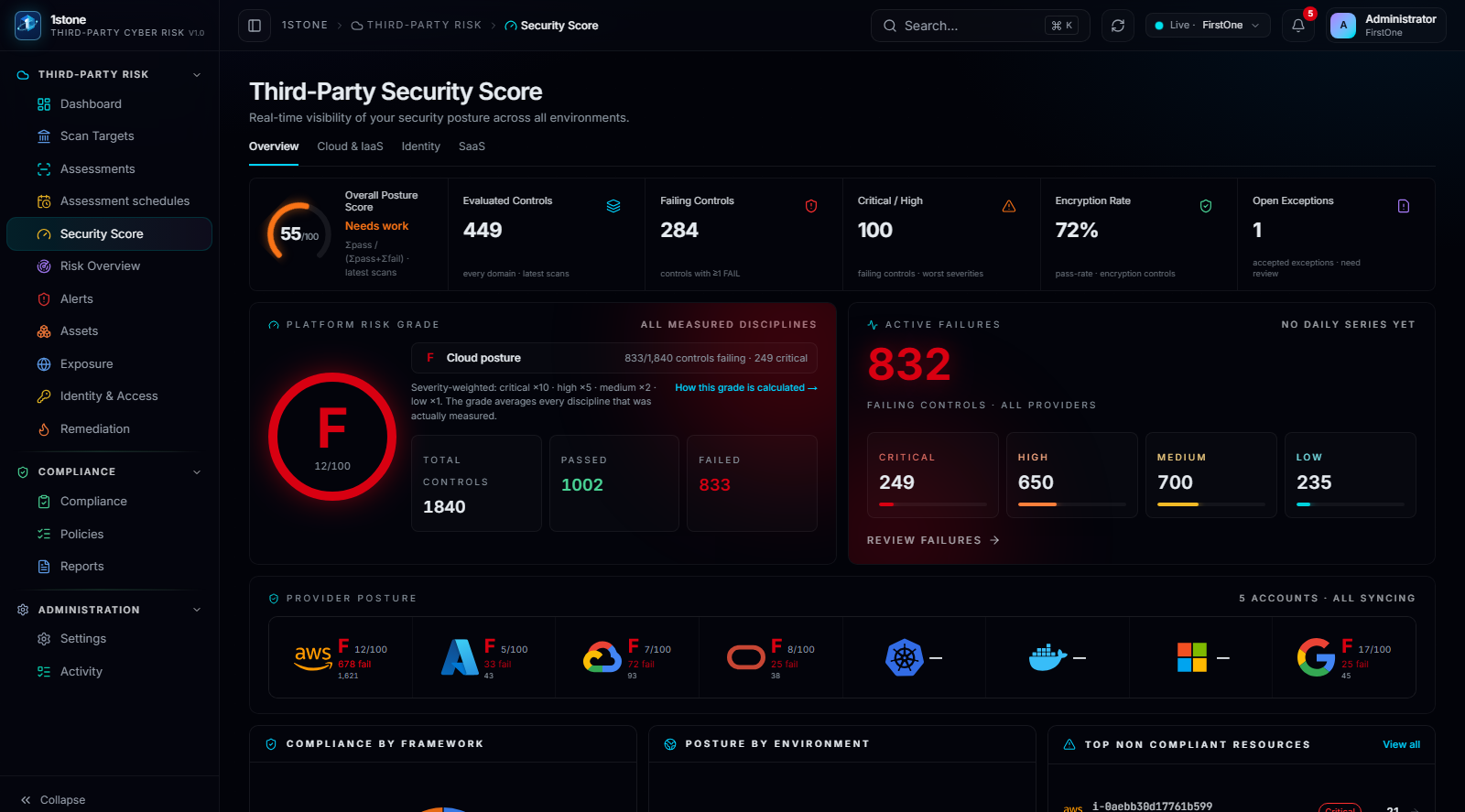
The score is a ratio of controls, not a guess
For every connected environment, the platform evaluates a defined set of controls and records a pass or fail per control, each carrying a severity weight. The Security Score aggregates that ratio across every environment the third party has connected, from 0 to 100.
The A–F grade is a fixed mapping of the 0–100 range, so the score and the grade never disagree — the grade is a readable label for the number, not a separate judgment.
Three environments, one number
The overview score is a roll-up of three environment scores: Cloud & IaaS (the connected cloud and Kubernetes accounts), Identity (permissions, entitlements and access hygiene) and SaaS (Microsoft 365 and Google Workspace configuration).
Each environment can be inspected on its own tab, which is what turns a single number into an explainable one: a reviewer can see exactly which environment is dragging the overall grade down.
- Cloud & IaaS: posture of AWS, Azure, Google Cloud, OCI, Kubernetes and registries
- Identity: access and entitlement hygiene across connected accounts
- SaaS: Microsoft 365 and Google Workspace configuration
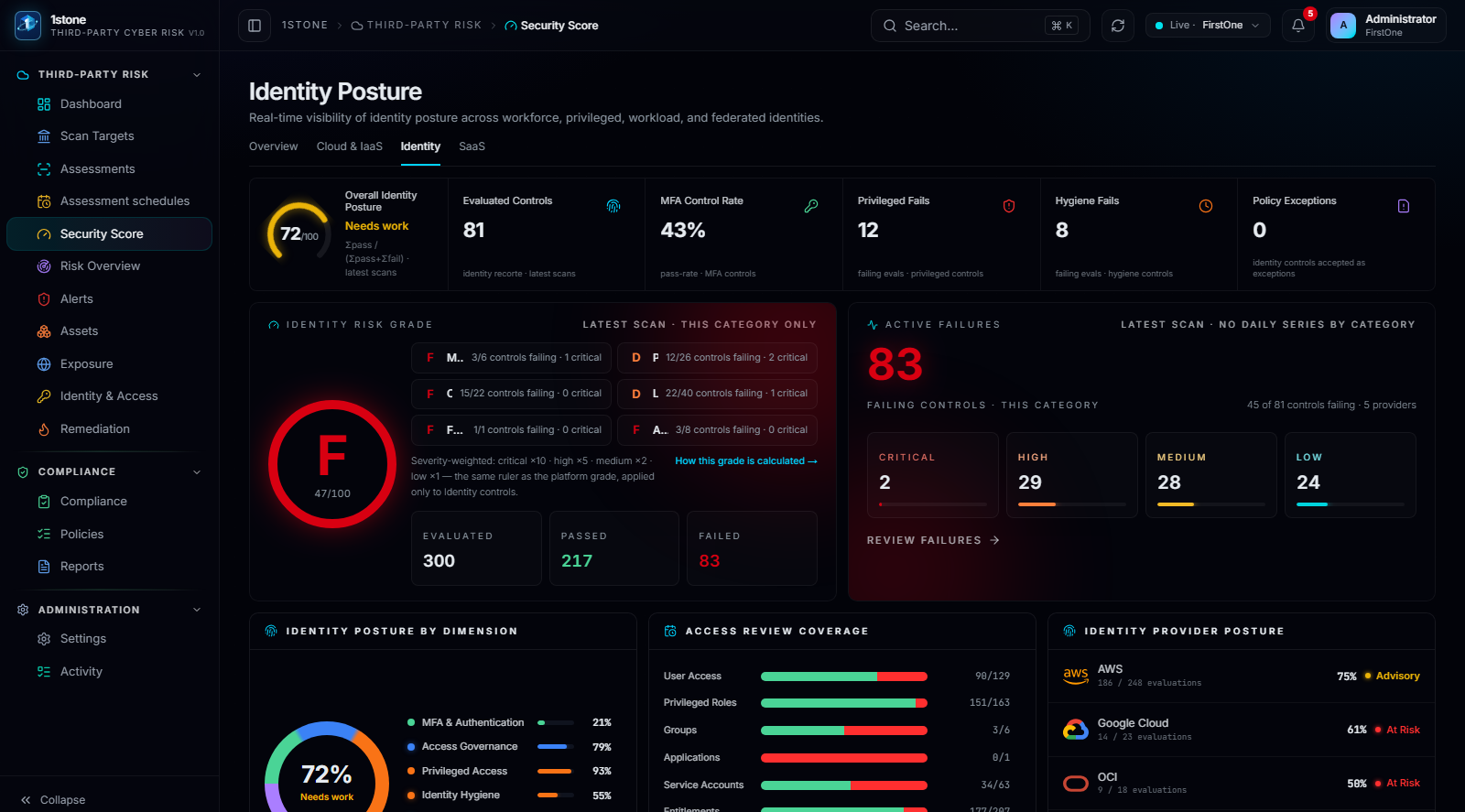
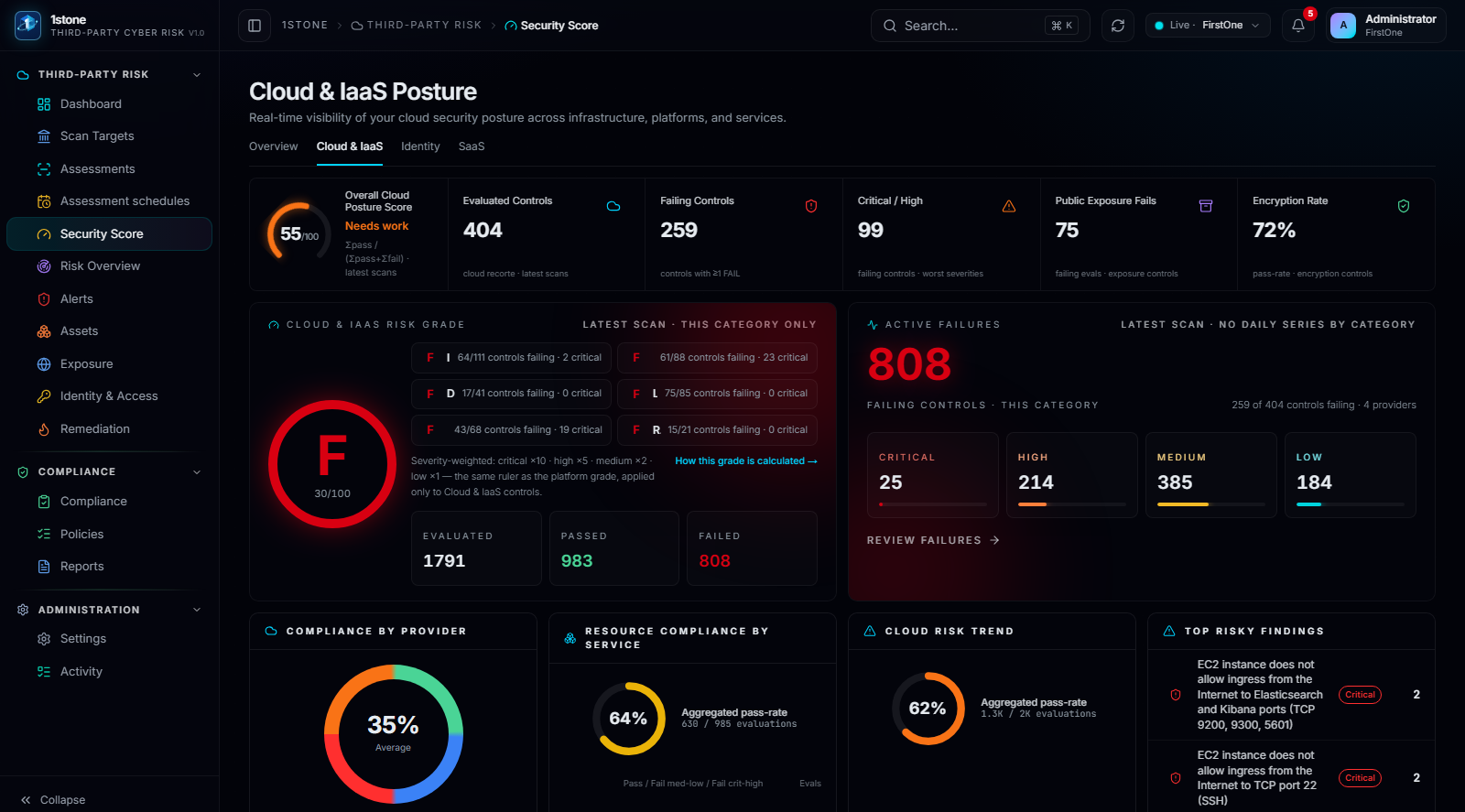
Cloud, identity and SaaS on their own tabs
Each environment tab shows the same pass/fail composition scoped to that domain, so a reviewer moving from the overview to the detail keeps the same mental model instead of switching frameworks.
The score moves when the assessment runs, not on a fixed schedule
The score is recalculated every time a new assessment completes on a scan target, not on a calendar. Fixing a failed control and re-running the assessment is what changes the number — there is no manual override that raises a score without evidence behind it.