Not every open finding deserves the same attention
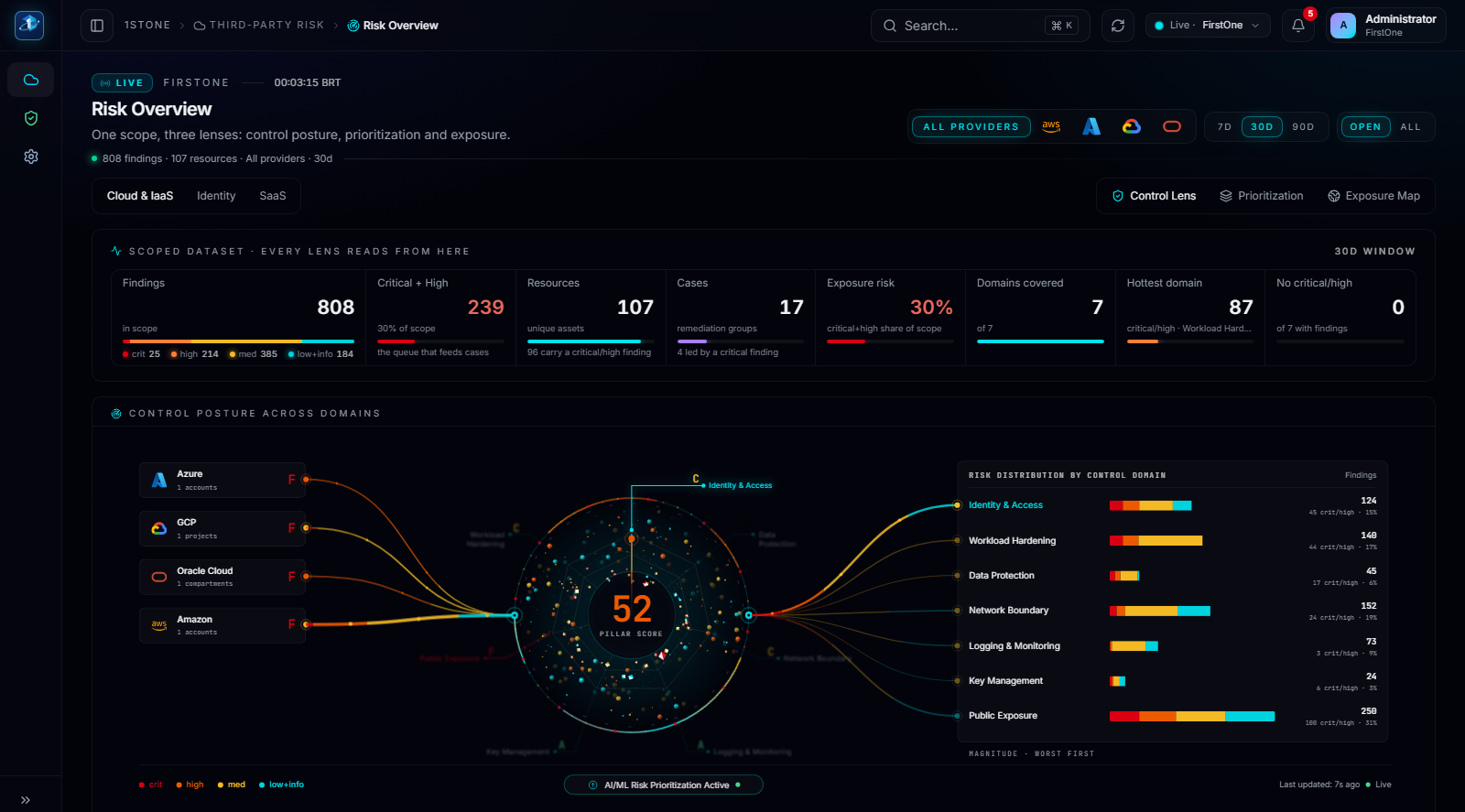
Open alerts differ by severity, by how many controls they affect, and by how much closing them moves the Security Score. A fix-first queue ranks findings by that combination, so the third party's team spends its first hour on the item with the largest effect, not the oldest ticket in an inbox.
From queue to case
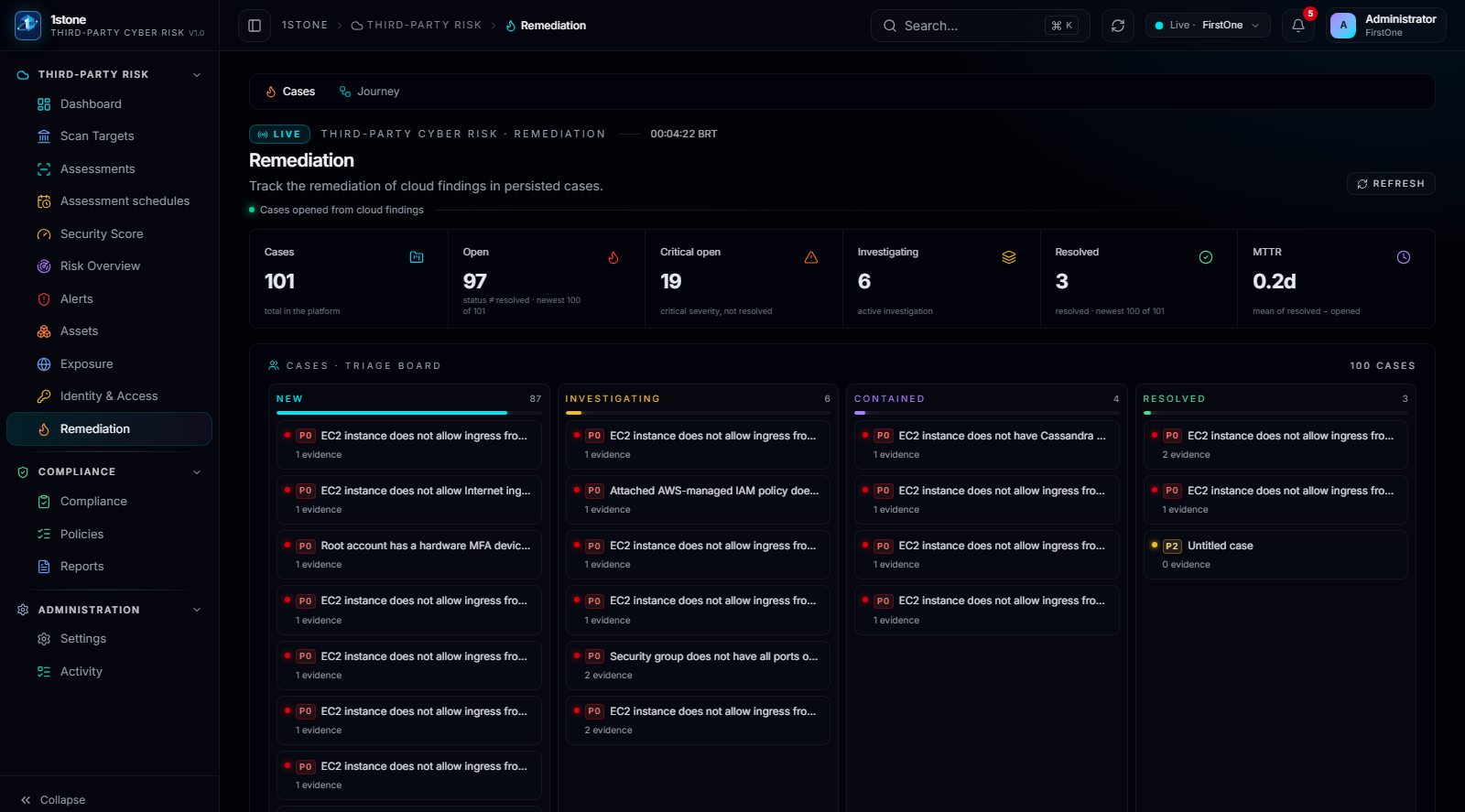
An item in the queue becomes a remediation case with a named owner, a description of the failing control and the affected resource, and a recommended fix. From there it is tracked like any other piece of accountable work.
- Ranked by severity and by effect on the Security Score
- One click turns a ranked alert into a case with an owner
- Recommended remediation attached to the affected control and resource
Measuring the program, not just the backlog
Mean time to resolution (MTTR) and the count of resolved versus open cases are the two numbers that tell a contracting organization whether a third party's remediation program is converging or merely accumulating findings.